
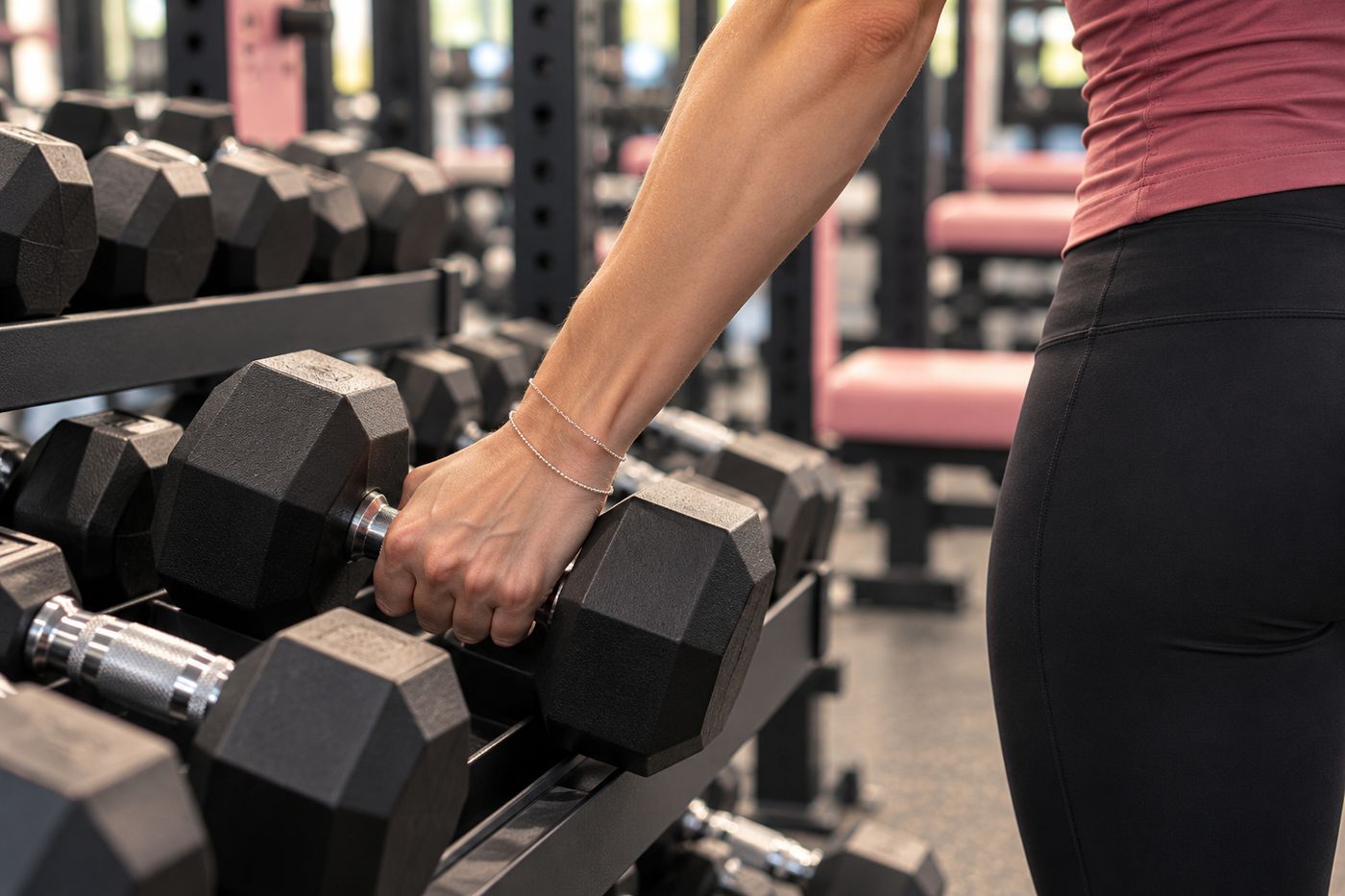
How should a woman start lifting weights? Learn six basic movements first: squat, hinge, push, pull, carry and core. Choose a weight you can lift for two to three sets of 8 to 12 reps with good form, train two or three times a week on non-consecutive days, and add weight or reps gradually as each movement starts to feel easier.
If you’ve been curious about lifting weights but aren’t sure where to begin, this guide is for you. Strength training can feel intimidating at first, with all those machines, racks and unfamiliar terms. But at its heart, it’s simple: you move your body against resistance, a little at a time, and gradually build strength you can carry into daily life. Let’s walk through exactly how to start, step by step.
Why strength training is worth learning
Strength training is one of the most useful things you can do for your body. The U.S. Physical Activity Guidelines recommend that adults do muscle-strengthening activities at least two days a week. Beyond the guidelines, many women find that lifting helps them feel more capable in everyday life, whether that’s carrying groceries, lifting a toddler or keeping up with a busy schedule. It’s also a skill that builds confidence: there’s something powerful about learning to move well and watching your strength grow.
Start with six basic movements
Instead of trying to learn dozens of exercises, focus on a handful of movement patterns. Almost every strength exercise is a version of one of these:
- Squat: sitting down and standing back up. Try a sit-to-stand from a bench or a goblet squat holding one dumbbell.
- Hinge: bending at the hips with a long back, like picking something up from the floor. A dumbbell Romanian deadlift or a glute bridge are great starters.
- Push: pressing weight away from you. Think chest press machine, incline push-ups or a dumbbell shoulder press.
- Pull: drawing weight toward you. A seated cable row or lat pulldown is a beginner-friendly place to start.
- Carry: walking while holding weight, such as a farmer carry with a dumbbell in each hand.
- Core: keeping your trunk steady, with moves like dead bugs, bird dogs and planks.
Learn one or two exercises from each pattern, and you’ll have a well-rounded foundation.
Machines or free weights?
Both are great, and you don’t have to choose one forever.
- Machines guide your movement, which makes them a friendly starting point while you learn how exercises should feel.
- Free weights like dumbbells ask your body to stabilize more and are very versatile.
Many beginners start with a mix: machines for some movements, dumbbells for others. As your confidence grows, you can expand your options.
How to choose the right weight
This is where most beginners get stuck. Here’s a simple rule: choose a weight you can lift for the full set with good form, where the last two or three reps feel challenging, but you could still do a couple more if you had to.
- If you could easily do many more reps, the weight is probably too light.
- If your form breaks down or you can’t finish the set, it’s too heavy.
- When in doubt, start lighter. You can always go up next set or next session.
Sets, reps and rest for beginners
A common, beginner-friendly starting point is two to three sets of 8 to 12 repetitions for each exercise, resting about one to two minutes between sets. This isn’t a magic formula; it’s simply a manageable structure while you learn. Focus on slow, controlled movements and steady breathing, exhaling as you push or pull.
A sample first workout
Here’s what a simple beginner session might look like. Take it at your own pace, and rest about 60 seconds between each exercise.
- Warm-up (5 to 10 minutes): easy walking, cycling or the elliptical, plus a few gentle bodyweight squats and arm circles.
- Squat: bench sit-to-stand or goblet squat, 2 sets of 10. Rest 60 seconds.
- Push: chest press machine, 2 sets of 10. Rest 60 seconds.
- Pull: seated cable row, 2 sets of 10. Rest 60 seconds.
- Hinge: glute bridge, 2 sets of 10. Rest 60 seconds.
- Carry: farmer carry, 2 rounds of about 30 seconds. Rest 60 seconds.
- Core: dead bug, 2 sets of 6 to 8 per side.
- Cool-down: a few minutes of easy movement and gentle stretching.
How often should you lift?
For most beginners, two or three strength sessions a week on non-consecutive days is a great place to start. That rhythm gives your body time to recover between sessions while still building consistency. Remember, the best schedule is one you can actually keep.
How to progress over time
Strength grows when you gradually ask a little more of your body. This is called progressive overload, and it can be as simple as:
- Adding a rep or two with the same weight.
- Adding a small amount of weight once the top of your rep range feels manageable.
- Adding a set as your recovery improves.
Make one small change at a time, and write down what you lifted. Keeping a simple log is one of the best ways to see your progress and stay motivated.
Recovery matters, too
Muscle develops with consistent practice, good food and recovery. Sleep, hydration and regular meals all support your training. Some muscle soreness a day or two after a new workout is common; sharp or lasting pain is not, and is a sign to stop and get it checked.
Include protein with each meal. Protein gives your muscles what they need to repair and grow stronger after training, and spreading it across the day is easier than catching up at dinner. Eggs, Greek yogurt, chicken, fish, lean beef, beans or tofu are simple options to build each meal around.
“Won’t lifting make me bulky?”
It’s one of the most common worries about lifting. Building significant muscle takes a long time, specific training and intentional eating. For most women, starting a strength program simply means feeling stronger and more capable. Your program can be built around your goals, whatever they are.
Walking in with confidence
If the weight room feels intimidating, you’re not alone. A few things help:
- Go in with a written plan, so you know exactly what to do.
- Start in a quieter area or at a less busy time.
- Remember that everyone started somewhere, and most people are focused on their own workout.
Still choosing where to train? My guide to choosing a gym in Cedar City walks through what to look for.
When to work with a coach
You can absolutely start on your own. But having a coach beside you, especially in the beginning, makes it easier to learn good technique, choose the right weights and progress safely. That’s exactly what my strength training for women in Cedar City program is designed for: you’ll learn movement technique and follow progressive resistance training with equipment selected for you, all coached in person. Wondering if coaching is right for you? Read is a personal trainer worth it.
If you’re pregnant, postpartum or managing an injury or health condition, check with your healthcare provider before starting a new exercise program, and stop if you feel pain, dizziness or other symptoms.
Have five minutes for yourself?
Download Coach Ali’s free core routine and try a small step toward a stronger, more consistent you.
What’s your fitness personality?
Busy juggler? Gym-shy beginner? Seven playful questions reveal your style and the approach that suits you. See your result instantly.